Click one of the links below to take you to our new home!

Monday, October 09, 2006

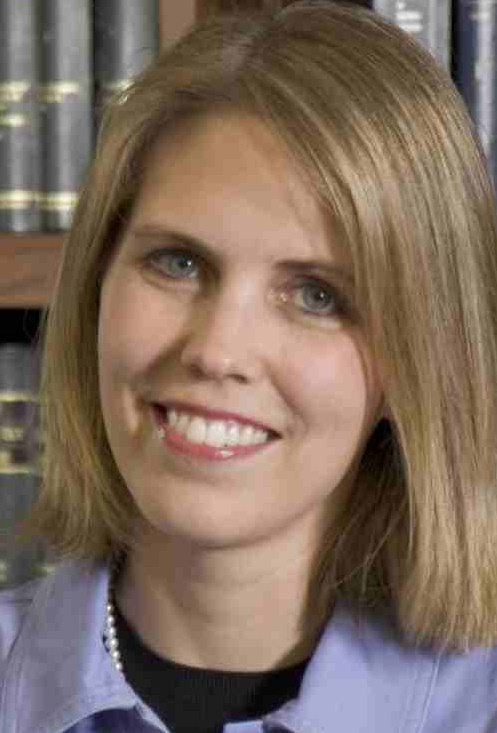
Introducing: Cara Putman

I am an attorney who resides in Lafayette, Indiana, with my husband and two children. I’ve lived all over the country and worked at a NBC affiliate in Nebraska, political campaigns, non-profit programs and fundraising, and clerking for a federal judge. I graduated with honors from the University of Nebraska-Lincoln and George Mason University School of Law. Currently, I lead women’s ministries at my church, serve on the local Big Brothers Big Sisters board, and am President of the Indiana ACFW chapter. My first book, Canteen Dreams, will release in October 2007 by Heartsong Presents.

My writing journey began in April 2005 when God told me to blow the dust off my dream and start working. So I have. Since then I’ve written two complete manuscripts, started two more, launched a blog (carasmusings.blogspot.com) and been a guest blogger at several sites. And I sold my first book at the 2006 ACFW conference.

I joined this group because it gives me one more opportunity to share my heart and encourage other moms. It also gives me a place to vent occasionally. Never a bad thing! I don’t know that there’s necessarily much I hope to get out of being a member. I enjoy writing and it doesn’t hurt to have a forum where someone might read what I write!

Fall Fun For Your Little Ones

School is back in swing and cooler weather has arrived. Your schedule may be already quite full, but here are a few simple things you can do with your children that you might find both relaxing and educational.

  • Identify the trees that the leaves came from using the Internet or a book on trees.
  • Using clear contact paper, preserve the leaves in a spiral notebook or book with blank pages.
  • Discuss the scientific process behind the leaves turning colors.
  • For toddlers, use the different colored leaves to teach them colors.
  • Discuss the root system and how it feeds the tree and how the tree gives off oxygen.
  • Use fingerpaints in red, gold, orange, and brown to paint an autumn scene.
  • Discuss how this is all part of God's marvelous plan for his creation.
  • Take photographs of your afternoon walk.
  • Gather leaves in a huge pile and JUMP IN!

Here are some things moms and dads can do:

  • Write a poem about your afternoon. Get your child to brainstorm with you for colorful nouns and adjectives.
  • Make a holiday card from your photographs of your day.
  • Help your child paint faces on acorns for decorations.
  • Visit a nursery with your child.
  • Plant a tree. Make it a new annual Treedition.
  • Tie a yellow ribbon for our service men and women. Tell your child about what it means to serve your country and God. Pray for our service men and women.
  • Visit a lumber yard with your child and discuss all the things trees can become.
  • Visit a newspaper. Talk about the origins of paper.
  • Write an article on conservation.
  • Watch the squirrels gather nuts for winter and enjoy a cup of hot chocolate.

This is just a few of the fun, yet educational things you can do this fall. Remember it doesn't always take money. Just a bit of time and creativity.

Sunday, October 08, 2006

God's First Priority

I've mentioned before how I've been going through the Experiencing Christ Within workbook by Dwight Edwards. I've done my fair share of Bible studies, but this one seems so fresh and new. I am learning so much and hope some of what I'm learning is rubbing off.

In week two, I explored the idea that people are not God's first priority. That God's main purpose is to show his glory!

Did you get what I just said?

We are here on earth to serve the living God and reveal His glory through our actions. Dwight Edwards says it like this, "Nothing-nothing-matters more to God than the glory of His name. He is ablaze with a perfect, pure jealousy for His reputation."

In this "What about me?" society we live in, this could be a shock to many. I had to read it a couple of times to fully understand what was being said. How many of us, me included, have been guilty of using God to meet our needs? Even the church and the Christian book stores are guilty of "selling" Christianity as a way to be successful and happy. But Jesus never promised success or happiness. Luke 21:12 says, "...they will lay hands on you and persecute you. They will deliver you to synagogues and prisons, and you will be brought before kings and governors, and all on account of my name."

According to Dwight, the main point of our spirituality has been forgotten. The Bible is full of examples of God trying to further his glory, not "fix" lives. Sure, he loved, cared for, protected and answered the prayers of his people, but behind every answered prayer was the revealing of His glory.

Dwight says, "So the question isn't whether God is on our side, responsive to our call, but whether we are genuinely on His side, responsive to His call. It isn't how God fits into what we're doing, but how we fit into what God is doing. He is the Creator; we are the creatures...He runs the universe. We fit in."

So the phrase this week has been "do my actions glorify God?" I've used it a couple of times with my kids this week and it's really stopped them in their tracks. Now I need to start applying it to my parenting. Do my actions with my children glorify God? Well, that's a whole other post for another day.

Gina Conroy is a homeschooling mom of four. For more musings by this author visit Portrait of a Writer...Interrupted.

Saturday, October 07, 2006

Meet and Greet


Today is "Meet and Greet" day, so be sure to check out the new members of the webring and visit some of the old members. And as always, don't forget to leave a comment!

Friday, October 06, 2006

Fiction Fridays: My First Contract

At the ACFW Conference in Dallas last month God gave me a deep desire of my heart. And He did it in a way I can only call a kiss from heaven.

Since I was a young girl, I have wanted to write. I have a shelf of journals at home that prove this. Periodically, I’d check out books from the library on how to write books. At the opening session of the conference I entered the ranks of soon-to-be-published historical romance writers.

In September 2005, I attended my first American Christian Fiction Writers conference. Earlier that spring I’d met Colleen Coble, and God took that nascent dream in my heart and breathed life into it. I could feel His smile that whispered to my soul now was the time to put time and energy into writing.

I moved my laptop downstairs and started working on ideas. I read materials on websites. Practical how-tos on how to build a story. I attended the first meeting of Indiana ACFW, where I realized just how little I knew. The wonderful women gathered there were talking about things like POV (huh?), character arcs and brainstorming. I felt like I had crossed through the looking glass and was on the other side in a new world where people used words I was familiar with but now held new and mysterious meanings.

I joined an ACFW mentor group and learned so much as my mentor, Pam Meyer, taught me basic writing rules. And Colleen Coble read portions of chapters and encouraged me as I emailed her updates. Then I joined crit group 25, a suspense writers group through ACFW, and we worked so hard on each other’s suspense novels.

At the 2005 ACFW conference two editors expressed an interest in my partial suspense manuscript. But as I volunteered, I had the opportunity to talk to an editor who shared a love of history with me, particularly World War II. I asked if he’d heard of a small story from western Nebraska that occurred during WWII. He hadn’t, and in that the seed for a book planted in my mind.

During World War II, a young woman in North Platte, Nebraska, gathered the people to serve the servicemen who came through on the Union Pacific troop trains to form a Canteen. From December 17, 1941 through April 1946 more than six million servicemen and women were served. Every train was met by volunteers. At first they were met with fruit, candy, and coffee. Within a month or two it had grown to sandwiches, hard-boiled eggs, desserts, fried chicken. As many as 25 birthday cakes a day were given to servicemen. And this was during the tight rationing. People saved their best and gave it to others. 125 communities in Nebraska, Colorado, and Kansas actively supported the Canteen. And all the money given to support the Canteen was private donations. The closest to federal support was a $5 donation from FDR.

The next evening I ended up at this editor’s table quite by mistake. I wanted to sit with my mentor Pam and get to know her better and she wanted to sit with him. I mentioned this specific idea to him, and he said he wanted to see it when it was developed.

About four weeks later I sent in the sample chapters and chapter-by-chapter synopsis so that I could get back to my suspense. Then I waited.

In December after the editor expressed interest in seeing a complete, I flew into overdrive and finished the book in three weeks. At Christmas, I spent a couple days double-checking my research and wandering around downtown North Platte imagining the streets as they had looked in 1941.

I tweaked the manuscript and sent the complete in sometime in early January and then tried to forget about it as I finished the suspense. At the end of February I got an email that said they liked it and wondered if I could add a couple small things to it. Perfect! I’d misremembered the word count and had plenty of room to add without taking anything out. Within a couple weeks I returned the manuscript.

So Thursday night I sat at a table with friends waiting for Barbour to announce who would receive contracts that night. The editors announced they would hand out two that night. My heart sank. There was no way I would be the one full-length manuscript they would pick up. As they got ready to announce it I looked down, my heart sitting in my toes, praying I could rejoice with whoever the newly contracted author was.

“The title of the newly contracted book is Canteen Dreams.”

I’m sure they said something else, but I shot out of my chair as I heard the words. Screams echoed from my left. I looked up to see Colleen jumping up and down. My fingers shook and my heart raced. It was as if every sense was heightened but I couldn’t take everything in at the same time. I walked up, shaking and reached for the envelope. I think I whispered “thank you.” And then turned to see Colleen running to me. Without a thought I was running to her and she spun my around as we hugged and shrieked.

You see the kiss from heaven was that God allowed me to get the contract where my mentor and so many of my friends could experience it and celebrate with me. Tears fill my eyes as I think of His goodness. I could have received a call, email or envelope at home. I still would have been thrilled, and my friends still would have rejoiced with me.

But this way I got to experience it in a way I will never forget.

Introducing: Mick Silva

Mick Silva is the youngest acquisitions editor at WaterBrook Press, specializing in narrative nonfiction and select fiction. The usual background stuff: 2 decades of Christian education in California. Eldest son to a pastor’s family of 3 boys. Some general Holden Caufield experience at a Christian college. Post-grad Europe trip to escape the frustrating absence of public outcry for his memoirs, etc., etc.

Logically, he went to work for Focus on the Family, spending five years as penance for his misspent youth, writing, editing, and keeping detailed notes for his eventual memoirs. Now as unofficial “Focus on the Family” editor for WaterBrook—which incidentally came with a much bigger bookshelf to hold his 217 daily journals—he wears square-frame glasses to look older and likes to be seen holding meetings at Starbucks at least a couple times a week. Visit http://www.yourwritersgroup.com/

Thursday, October 05, 2006

Special Kids, Special Needs, Tools part 2

Howdy, y'all! I hope you're having a great week. It's been a pretty tough couple of weeks for us. With my being gone to the ACFW conference for five days, and my husband learning the ropes I tend to manage with ease LOL, it created some challenges with my sons. Then, we had to travel out of town for a funeral, and now it's Fall Break for the boys. So, the last few days have created quite a few rough spots for the twins, especially Ryan. He's wetting himself and melting down at the drop of a hat. *sigh* I thought we'd gotten over that! Oh, well. These are my two signals that he's not coping well. Not very good signals, but they are loud and obvious. :-D What caused this? Disruption of what he had come to count on: my presence at home, his dad's presence NOT at home (during the day, of course)...basically status quo went down the tube!

How are we pulling this back together? With time. And a few skills I've learned from various sources. For Ryan, the biggest thing is that he needs a place where he can get himself back under control. That's not his bedroom, and it's not a place that is populated. For him, it's a wall near the kitchen that has NOTHING he can throw, destroy, or injure himself with (well, save the gypsum wall itself LOL). Ryan knows that he must sit against the wall and bring his anger back under control. This isn't done immediately. It usually takes him time and a few fist-pounding seconds. LOL But he gets it together.

Another thing is to anticipate the outbursts. This isn't always possible, but it does go a long way. You know what they say...an ounce of prevention is worth a pound of cure. when I see Ryan's levels of anger and frustartion rising, I'll quickly point out something--ANYTHING--that he is doing right. If it's just that he's angry and not hitting, I praise him for that. I know. It sounds hypocritical. But it's not. You have to think in reverse, of sorts, with our specially wired kids. You want their attention back on good things, not on the negative feeding through his body.

DISCLAIMER: Mention of this book is not an endorsement. I have not read the book all the way through, but in the 3/4 I have read, I have been challenged to think outside of the box.

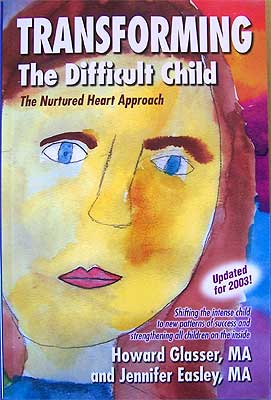
I bought a book about a month ago that I've been reading at the recommendation of a psychologist who evaluated my twins for school. Granted, I bought it with a wary heart. As a psychology major, I am well aware of the humanistic mentality that is sweeping our schools and nation. So, as with ANYTHING, and as a Christians, I have a responsibility to weigh everthing against the Word of God. While I don't necessarily agree with everyting the "experts" say in this book, it definitely challenged my way of thinking and dealing with my sons. It's called: Transforming the Difficult Child
If you are still using the "more discipline" method for our unique children, you might want to zip on over and read this first chapter. It will challenge you. Go with a prayerful and open heart to receive anything the Lord may enable you to use for your child. For me, I am not convinced that all special children do negative certain things to elicit responses. I do believe, that they can get "stuck" and that's why it's imperative (as I mentioend earlier) that we toss their attention back toward something positive.

I really hesitate to even mention the book, but it did open my mind. I worked as an intern at The Child Study Center in Forth Worth. Truly, an amazing facility, staffed with incredible teachers. What I learned at the CSC is, for a large part, reiterated in the book mentioned above. Some of the methods and advice might sound hokey--it did to me at first--but the y worked (at least, the ones I tried worked!).

I'd like to make a note about the Penny Card post I made before. The thing I really liked about the Penny card, was its mobility. The boys could take it with them anywhere. In the middle of Wal-mart, I could say, "Ryan, I'm proud of you for doing X-Y-Z. Give yourself another penny." We no longer fear to tread the path to Wal-Mart. :-D

So, anyway, onward we plod through the treacherous waters of raising these amazing kids--and surviving! I'd love to hear from y'all. We're often alone in these waters, so let's toss each other a life raft of hope and encouragement. :-D

Blessings in Christ,

:-)Ronie
----------------------------------------------------------------------------------------
Ronie is a mother of four children, ages 13, 10, & 6 year old twins. She homeschools, attends college, and writes. Married to Brian, her husband of 16 years, Ronie yearns to help other mothers struggligng with special needs children and the challenges they present. Visit her blog Craving the Supernatural or RonieKendig.com to learn more about her.

Wednesday, October 04, 2006

Introducing: L.L. Barkat

For fifteen years, I tossed around as a magazine designer, art director, and editorial consultant. Now, I'm a speaker for a New York Bible teaching ministry. My first book, currently titled Secrets in Stone: finding grace in hard & hidden places, combines memoir with spiritual musing and is due out next year through InterVarsity Press.

No surprise, the name of my blog is Seedlings in Stone. I just love the thought that life can grow in the most unlikely places. And, that's what drew me to Writer...Interrupted, too. Thinking about all the life we writers nurture out of inhospitable environments and emotions... I want to be a part of a group that recognizes and works with this reality.

I can be found in all my love, craziness, and light
humor, at seedlingsinstone.blogspot.com. and
www.llbarkat.com

WFMW: Writer....Uninterrupted


For once I have something that works for me that has to do with writing.

Lately I have had to work at my computer, a lot. I have several blogs to work on, administrative work to do for our women's ministry, tons of email, not to mention actually writing-writing. All this while my kids ask questions about their school work or run around screaming (which they always seem to do when I get on the phone start working at the computer). I finally realized that I needed some way to let them know that I AM WORKING! without yelling it every time they try to talk to me.

We came up with an interesting solution--not perfect mind you, but it helps. When I am working I put on music. So if the music is on and I am at my computer then I am working. Period. The nice thing is that the music also drowns out their noise to some extent. My husband, who works at home as a programmer and also needs to concentrate, does this as well. The kids know if music is playing that they are not to interrupt, or that they must at least say excuse me and then wait until we give them the go ahead to speak. At the very least it makes them think twice before speaking which is always good. (I also try to save movies or playing outside for when I NEED to focus.)

I wonder how others do it, especially those who like me don't work on a schedule. How do you make deliberate time to write, or do any other project, without kid interruptions, especially if you homeschool?

Heather Young is a saved by grace, homeschooling, mother of three, wife of one, writer, artist, and web designer who drinks way too much coffee and spends too much time at her computer. She writes for Graced by Christ, Laced by Grace, Everyday Miracles, and Writer....Interrupted. Someday, God willing, she will finish one of her WIP and attempt to get it published, but not until God says the timing is right.

Tuesday, October 03, 2006

Introducing: Marybeth Whalen

I am a writer and speaker for Proverbs 31 Ministries. I have always written-- ever since I was a little girl and could first put words on paper. I love to write, and feel blessed to be able to do something I love. When I was a little girl, I used to say that when I grew up I would be a writer and have six kids... And that is exactly what happened! I am truly living my dreams.

About 2 years ago, God gave me the idea of putting together a book for other women who want to write but don't know how to get started. I worked with 31 contributors who contributed their experiences with publishing and wrote a Bible study to go along with each contribution. I pulled the book together in about ten weeks time and it was released in July 2005 at CBA in Denver. We also featured it at the Proverbs 31 She Speaks conference that year. It has been very exciting, and I am humbled to see the ways God is using this resource to reach writers who want to share their story and honor God at the same time.

For more info on me, you can go to my website at www.marybethwhalen.com and click on my blog button. I update my blog frequently and love to hear from other writers who "find" me on the web!

Breaking into Magazines

As a pre-teen with literary dreams, I was blessed to have a newspaper editor for an uncle. During a visit to his house, he introduced me to a Writer's Market and demonstrated how to submit poems and short stories to magazines. After a few dozen submissions, I received my first byline. And you know what--I still have the $8 check, proudly displayed in an old scrapbook!

Now, beginners often ask me, "How do I get published in magazines?" As I've pondered the answer to that question, I've uncovered important tips to building a career as a freelancer. Hopefully, even if you've been at this writing thing a while, you can glean something new from what I've learned (often, the hard way--ouch!).

Tip #1: Study the markets. First, invest in a writer’s market guide. Writers’ Digest has an excellent one, as does Sally Stuart (for Christian writers). Also, Writers’ Weekly website and other writing sites send free weekly emails with market listings.

When you get the guide (or receive a markets ezine in your in-box), familiarize yourself with its layout and pick a few markets—those which match your expertise, aspirations and/or interests--to study. Each market listing gives out information you can’t get just by reading a magazine, such as whether or not the editor accepts complete manuscripts. Market entries list website addresses (where you can often find more comprehensive writers’ guidelines), snail mail addresses (so you can send off ms. by snail mail if they request it), magazine departments, and editor names.

Tip #2: Notice rights information, such as whether or not the publication sells “first rights” or “all rights.” Many writers sell “all rights” (which is just what it sounds like—you lose all rights to your work) only when they’re starting out or when the magazine pays extremely well. The rights you sell are important when you begin to re-sell your published work, or if you ever plan to use articles in a compilation or book manuscript.

When magazines purchase first rights, it gives them permission to use your piece once. Then, if they want to reprint it or use it in another format, they’re obligated to pay you again. If your piece has been published before (even on a personal website), it’s considered a reprint, so you’ll need to sell reprint or second rights.

Tip #3: Go the extra mile. Subscribe to online and print newsletters and peruse magazines in public places. Spend time online or in your local library, reading back issues. As you study the variety of places to send your work, you’ll get a feel for each magazine’s audience and the kinds of pieces they publish.

And keep current by subscribing to writers’ magazines, purchasing an updated market guide every year, and calling the magazine before you submit to make sure you have the right editor’s name on your manuscript. Why? First, markets rapidly change, and second, editors and agents repeatedly change positions. The writer with the advantage is the one who stays abreast of people, publications, and trends.

Case in point: a magazine accepted an article of mine (which they had previously rejected) because I re-submitted it when a new editor came on board. I found out about the opportunity through the "market news" section of a professional writer's newsletter. Makes the $50 a year subscription price worth it! (I also found my first book publisher with a lead from that same newsletter--which Writers Information Network still publishes.)

Tip #4: Craft an excellent manuscript or query.

How do you get those all-important first credits? Author Sarah Stockton says, “I queried places where I felt I had something to contribute (that I felt passionate about), with an idea directly related to their content and an angle that I hadn't seen from them before."

If the market listing says the magazine accepts complete manuscripts, go ahead and send them an error-free, excellent article which has been targeted to their specific audience. If they ask for a query, don’t send a manuscript—unless you want an automatic rejection!

A lot of writers are scared of queries, but they’re not intimidating once you learn how to craft them. I write each query like a mini-article, with a short “grabby” lead (often a quote or statistic), a bit of preliminary research, the sources I plan to interview (I usually find these online), and my writing credits. I then close the letter by asking for an assignment and offering to write a different article if the editor has a need for a new freelancer.

The big thing? Don't forget to proof your letter or ms. (Don't rely on spell-checker, either--it's notorious for missing obvious stuff.) Then let it sit for hours, or preferably days, and check it again. You'll be surprised how many mistakes you catch when you come at your document with a fresh eye.

Tip #5: Sell and re-sell.

So what do you do after sending off an article? Start on the next one or submit your first piece elsewhere. Just be sure and let editors know you’re submitting simultaneously. (That’s a common practice, since it can take months to hear back from a magazine. In the unlikely event that more than one magazine wants your piece, rejoice—and then pick the highest paying one!)

And once you have a few excellent clips--tear-sheets of published work from magazines--try selling them again to new markets. Each time, you'll receive a byline, as well as payment, for “easy” work.

Tip #5: Don’t take rejection personally.


This is the toughest one. Becoming a successful magazine writer takes perseverance, patience and discipline. Remember, every author—even famous ones—receives rejections. Remember: it’s not about you. You may have queried the magazine with an idea that they were already working on, or you might have approached them at a bad time. If you get a personal rejection letter, be impressed, and read it carefully. And if they ask you to submit again, do it!

Before sending your piece back out to a different market, try to determine if your manuscript needs re-tooling. (Critique partners or groups are very helpful in that regard.)

Keep honing your craft, learning about the industry, and sending out excellent work. If you do those three things, I believe you will find your niche—if you don’t give up.

Just be sure and let me know when you get that first check!

Author Bio:
As a busy wife, mom, author, and speaker, Dena Dyer adores her life—but there are days when she wants her own mommy! Thankfully, she has God, her mom, and a counselor on speed dial. Dena is the proud wife of Carey and mom of Jordan and Jackson. When she’s not desperately trying to find her keys or cellphone, she enjoys writing books such as The Groovy Chicks’ Road Trip to Love (Cook/LifeJourney, co-compiled with Laurie Copeland) and short pieces for magazines like Family Circle, Today's Christian Woman, NickJr. Family and Parenting. For more information, visit her website: www.denadyer.com ; The Groovy Chicks' website: www.groovychicksroadtrip.com ; or her blog "Amazing Grace-land," geared toward mommies, writers, and other followers of Jesus: www.denadyer.typepad.com .
Monday, October 02, 2006

A Heritage

The kids and I traveled to Nebraska last week.

It was a whirlwind weekend. We celebrated my baby brother's wedding followed by my grandparents sixty years of marriage sandwiched with another wedding celebration.

Times like that make me consider what's really important.

As my cousins, siblings and I reminisced about what meant the most to us about our grandparents, it was amazing to see common threads. The family gatherings/celebrations at the drop of a hat. Any excuse would work really. Birthdays, Fourth of July, Christmas, Easter, It's-been-too-long-since-we-all-got-together. Games. Games of every sort: ten point pitch, cribbage, gestures, trivial pursuit, 500, you get the idea. Even cleaning chickens -- nasty business that it is -- formed a core line of memories. And each memory is an anchor point that makes us family.

We enjoy being together. There is a genuine love and affection for each other. The kind that says I will be there tomorrow if you need me. Because family is so much more important than other things.

My throat is tight as I consider what a rich, godly heritage that is. And it all started sixty-four years ago when Grandma and Grandpa met at a dance in small town Nebraska. Four children, seven grandchildren, and nine great-grandchildren (and we've hardly begun!) later that history of love and commitment is alive and well.

As I watched the great-grandchildren running, toddling, and crawling around it made me desperate to duplicate that experience with my kids. My extended family is really my immediate family. My cousins, aunts, uncles, etc., are as much my family and as important as my parents and siblings. And each year that family grows as we marry and have children. It isn't always fun being part of a big family. Sometimes challenging words have to be spoken, but there is nothing like knowing people love you just cause.And I am desperate -- there's no other word for it -- for my kids to have that kind of security. The security of being loved just because you exist by so many people.

In a world, that is so self-focused, I believe it is more important than ever to create those bonds.

If you aren't blessed with that kind of family, create your own. When we lived half a country away from my family, we did just that. The ladies who lived next door were Abigail's surrogate grandmas. Our dear friends are still aunts and uncles to the kids. When we arrived back from Nebraska, Abigail and Jonathan had a package waiting from one of their "aunts", just because she'd been thinking about them.

So if you lack this, beg God to provide a surrogate family. I am convinced He will, because He loves family.

Introducing: Mary E. DeMuth

I love to write and speak about the redemptive hand of God in impossible situations.

My books include Ordinary Mom, Extraordinary God (Harvest House, 2005), Building the Christian Family You Never Had (WaterBrook, 2006), Watching the Tree Limbs, and Wishing on Dandelions (NavPress, 2006).

A thirty-nine-year-old wife of Patrick and mother of three, I live in the South of France where we are planting a church. I joined Writer...Interrupted for the community it offers. I hope to meet other writers through this endeavor as well as be a part of encouraging others in the
craft.

Blogs: www.relevantblog.blogspot.com
www.pioneerparenting.blogspot.com
Website: www.relevantprose.com
Favorite entry:"Publishing Doesn't Validate Your Life"

Sunday, October 01, 2006

Life Value


© Staci Stallings

Everyone understands that if you sell something, you get a cash return. This return may be large or small depending on the quality of the product or service. The cash value of any particular item may be expressed in dollars and cents. A widget may cost $5.00 or a super-widget may cost $5,000.

What most people don't understand, however, is the concept of "life value." In other words the value in enhanced life-terms that the purchaser gains in return for trading their cash for a product or service. Recently when I read about this concept, I went, "Wow! I'd never thought of it like that." What I was particularly impressed with was how different this makes life itself feel as it is expressed through me and as I look at others.

A simple example (and the one I am most familiar with) is brought to expression in my books. My first collection of short stories "Reflections On Life" was recently published. The cash value of this book is $12.95. In order to purchase the book, that is what a reader would have to pay for it. However, the life value can vary widely depending on the purchaser.

Let's say I talked someone who never reads into purchasing "Reflections." This person would turn over $12.95, take the book home, put it on their shelf, and the life value of that book would be zero-unless by some miraculous intervention it fell into the hands of another person who was a reader.

Now, let's take that same book. The cash value is still $12.95; however, this time the purchaser is not only an avid reader but fully engaged in learning about life and putting that knowledge into action. In this instance, the life value may well be immeasurable because that person will take the concepts in the book, apply them to their lives and the lives of those around them, and life increases for everyone involved-whether they directly read the book or not.

As I thought about this concept, I realized how transferable to other circumstances it is. My brother-in-law for instance is a banker. He deals mostly in granting loans to farmers and individuals for homes and cars. If he were to talk someone into taking out a loan that they did not need, the life value of that loan could well be negative because it would drain the borrower's spirit as well as their pocketbook. However, if he lends money to a farmer for instance, and that farmer uses the loan to purchase seed and equipment to grow and harvest the crop that results, the life value of that loan is surely immeasurable. Not only does the farmer make a profit and thereby enhance his life by being able to provide for his own family, but the fruits of his labor enhance the life value of every person who then purchases and consumes or uses the products that results from this crop.

Isn't that an awesome way to think about what you do for a living?

And there are other prime examples in my own family. My mother and my sister both baby sit. The cash value of what they do pales so far in comparison to the life value of that endeavor that it's ridiculous! And another example, my brother sells tools to fix cars. Each tool he sells has the capacity to enhance the life of the mechanic who buys it because he can now do in 2 minutes what would've taken 2 hours to do with the wrong tool. Not only that, but that one tool has enhanced the life of every person whose car it is used to fix. It also enhances the lives of all those other drivers on the road who are now safer because that car is working properly. It also conceivably enhances the lives of those who drive and ride in that car-to work, to school, to Grandma's for Christmas. Think of the life value of that one, simple sale!

My brother's wife has recently begun cleaning houses. Think of the time these families now have to be together enjoying life rather than picking up and vacuuming because of her contribution to their lives. She also gives her time (not paid) to help at her children's schools and their various teams and clubs. There is literally no telling how much life value she is adding to the existence not only of her children but of all of the children who benefit from her efforts. Life value abounds from her efforts!

My husband builds things. He builds houses. He fixes doors. He builds cabinets. Each and every fix-it job and new construction that he lends his hands to increases the life value of someone and sometimes that of many someones. Innumerable people have walked through doors that work because of him. They have stored important information in cabinets he built. They have lived and raised their children in houses that he built. Life. Life. Life in the extreme-not because of cash value but because of life value.

And it gets better, my father is the janitor and the baseball coach for my hometown high school. He spends his days making sure the teachers have what they need to be able to impart knowledge to a whole passel of children. The cash value of this may not be huge, but the life value is astronomical to the point that you cannot even count it!

So the question is: When you think about the value of what you are doing, do you assess your success only in terms of cash value-thereby trying to sell whether the product will enhance or diminish the purchaser's life, or do you make a serious effort to greatly multiply the purchaser's life experience through your product or service? It's a great question, and life looks very different depending on which "value" you are focused on.

The examples are everywhere! Walk down an aisle at the grocery store. Look at a box of cereal or a bottle of medicine. You pay cash value of $3 to $10 for this purchase, but it makes you full or makes you well. Life value.

Once you understand this concept, take a moment to visualize those who have traded hours of their lives to enhance YOUR life value. There's the life value of the person who came up with the grocery cart you are pushing. Think of the time-savings and therefore the life value that represents. There is the person who built the shelves so that the products can be displayed in an orderly fashion.

There is the person who put those shelves together. There is the person who stocked those shelves so you can just walk in and buy what you need without hours of searching. There is the person who created the item that you are buying-the person who came up with the type of cereal, the person who figured out that "this combination of molecules" will cause your body to do this and thus get well.

The reality is that life value is everywhere you look. When you take life value for granted or discount it because you are focused on cash value, you're missing the point completely. Try it. I challenge you. Begin to look at life value for one day, and if it doesn't completely change how you look at life, you can always go back to measuring everything in dollars and cents.

*~*~*
Looking for more awesome inspiration? Come on over to Staci's blog... http://stacistallings.blogspot.com You'll feel better for the experience!

Saturday, September 30, 2006

Congratulations Cara!

Check out this interview with one of our own.

Hopefully she'll be posting a little testimony for us here at Writer...Interrupted.

Thoughts On Writing


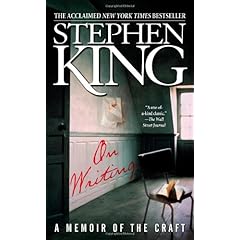
Stephen King wrote On Writing, A Memoir of the Craft. If you’re around me long, you’ll know that this man has been my mentor even though he doesn’t know it. You may cringe because you think you know him, but stay with me for a little while. This man is one of the greatest storytellers of our time.

I want to address one sentence that I underlined on page one hundred fifty-two. He says, “If God gives you something you can do, why in God’s name wouldn’t you do it?”

We’re all joined together here by the common thread of writing and mothering. I know that God gave me my son, Zane. I wake up with him, and I’m with him all day long. I feed him, I homeschool him, and I tuck him in at night after our prayer. God also gave me words. But for some reason, those get shoved to the bottom of the pile when things start to avalanche.

In my life, today especially, I need to ask God to forgive me for putting this gift of words under a basket. I always understood that verse to mean that I shouldn’t hide my love for God. But today, it means something new. I looked at it from a different angle. The light God asked me to shine comes in the form of writing. Yet I am so afraid of it, so terrified to admit I might be good at it, and so unaware that He has given it to me to shape and mold through Him.

Can you imagine the horror if I treated Zane like I treat my writing? Oh boy, medical emergency, can’t be with my son today. Fridge went out, no time for the boy. Life is crazy, put the boy aside. Gotta go grocery shopping, plan a party, go to Bible study, be a soccer mom, I’ll get to the boy soon, just not right now.

This thing called writing should not take over and consume my life, but it also shouldn’t be shoved aside and thrown out with the trash. It should be cared for and nurtured. It is the gift God gave me and He expects that I take care of what He gives me. How disrespectful of me to say, “Oh yes, Lord. Thank you for giving me this gift of words. Let me just shove it away in the corner until I’m ready to use it.”

The theme of this year’s ACFW conference was New Beginnings. I think this should be a new beginning. A clean slate. I’ve asked God to forgive me, now I need to show Him that I appreciate the gift of writing that he has blessed me with.

~michelle
My thoughts grew hot within me and began to burn, igniting a fire of words
Psalm 39:3


Michelle Pendergrass is a coffee-lover who lives in Knox, Indiana where she homeschools her son, Zane. She blogs at Just A Minute. When you visit, please note that her son is most definitely weaned and has been for some time now. Some names just stick.

©2006 Michelle L. Pendergrass - All Rights Reserved

Friday, September 29, 2006

Introducing Fiction Fridays

Action vs. Summary
By Tricia Goyer

When it comes to writing fiction there are two ways to write scenes. One is
to "show" the action. The other is to "summarize," which is called
narrative. How do you pick which to do when?

1. Consider the importance of the scene. I've been working with some new
writers and one common mistake is that they give equal weight to everything.
The scenes that should be more in-depth, including dialogue, are the ones
that *highlight action.* Also, check with each scene to make sure it's
crucial to the story.

BUT . . . if the information is simply a connecting point for two more
powerful scenes, then use narrative summary. Sum things up and move to the action.

Finally, if it isn't crucial for the story (the story can't be told without
it) cut it.

2. Consider the pace of the scene. In fiction, most books do not have long
passages of narrative summary. We go back to the old saying, "Show don't tell." Narrative summary is telling. Instead you need the reader to *see* what's happening with your characters. Better yet, *live* what's happening because you've pulled them into the scene.

One way to get a good idea of pace, is to read books that you love, books
that are similar to your own, and preferably books that are best sellers!

Jack Cavanaugh says the best way to get a sense of flow, is to type out some of your favorite passages from your favorite books. First of all, it makes you slow down and notice what the author is doing. Second, after 10-15 minutes you have the natural rhythm in your head and when you move over to our manuscript then hopefully you'll be able to keep with that rhythm.

3. Turn off your internal editor. When you're writing, think *people and
action,* don't think about the mechanics. Let the people and action tell
your story. When I write my novels, I write at least 1,000 words at a
sitting, and I try not to stop. I don't look at spelling or grammar, etc. I
don't go back and read what I've written, until the next day. I just jump
into the book and let the story take me along.

Thursday, September 28, 2006

It's Carnival Time!!

I'm excited to announce a new feature here at Writer...Interrupted. It's the Carnival of Christian Writers. We will be hosting the carnival here once a month on the last Monday of the month. Please read the guidelines below and submit your entries!!

Guidelines:

Your post must be related to writing.

Please check out the writing guidelines on the sidebar.

The deadline is the LAST Saturday of each month.

Please write a one to two sentence blurb about your post including your name with the link to your blog and a link to your actual post you're submitting to the carnival. Email it to me at Portraitwriter@gmail.com

Please put a link to this blog in your post somewhere. We do not have a button at this time, but hope to in the future.

One more thing, spread the word!

Any questions? Email me.

Meredith Efken
Author and Homeschooler

SAHomeshoolingM, Meredith Efken maybe new to the author scene, but her debut novel SAHM, I AM, speaks from years of experience. I'm so glad she's made time in her busy schedule to chat with all of us.

Meredith, thanks so much for doing this interview. As a homeschooling mom and aspiring fiction author, I’m anxious to glean from all your experience.

Oh, dear. If you homeschool, too, that means I really can’t fool you into thinking I know what I’m talking about. Homeschool families are awfully sharp.


Why was your first book about a SAHM, and what message were you wanting to get out?

My first book was about a SAHM because it was the first story I wrote that was good enough to get published, and it happened to be in the right place at the right time.

I don’t know if I had a particular message burning in me. I just noticed that there were lots of “chick-lit” comedy novels that included SAHM characters, but none of the authors were getting it right in regards to what it’s really like to be a stay-at-home parent. They constantly made us sound out of control and pathetic. I wrote my book out of a need to tell OUR story—stay-at-home moms are real people who are smart, funny, and have hopes and dreams for their lives. We have a tough job, but we aren’t saints. Don’t put us on pedestals. We also aren’t victims or people to be pitied or disparaged. I wanted to let moms know that it’s okay to want something more than being a child-care worker and housekeeper. If that’s your passion, great. If not, it’s okay to go in a different direction.

Writing SAHM I Am was also therapeutic to me because I got to work through a lot of the mixed feelings I have about being a stay-at-home mom. Truthfully, “Mom” was never high on my list of What I Want To Be When I Grow Up. I love my kids, but I have a certain amount of ambivalence about the actual job of motherhood. My book let me express that in a way that was healing for me, in that it let me acknowledge my feelings and work through the guilt of not always relishing my mommy duties.

Before you were published, did you ever feel like you’ve “missed” God in regards to writing or home schooling, that maybe you should be doing something else?

Absolutely not. I’ve had lots of self-doubt about my ability to write well enough to be published (still have those doubts…they don’t go away after the book contract, sorry to say.) I’ve had my own self-generated guilt for not doing all the mom-stuff it seems that I’m expected to do, especially since “all I do is stay home all day.”

But I’ve experienced what it’s like to be in a career and/or volunteer position that God didn’t design me for. The square-peg-in-round-hole feeling is terrible. It’s not like that with my writing career. I fit there. It’s what God designed me for. And even before I was published, I knew that with or without a contract, writing was something in my soul that had to be done if I was to continue being a healthy person. I can’t go long without it or I feel withered and incomplete. I’m just extremely thankful that God did allow me to make a career out of it. It’s something I can happily spend the rest of my life learning more about and sharpening my skills and craft.

I feel the same about writing and being around writers. I finally found the place where I belong and it feels good to fit in!

Homeschooling…that’s a different story. I know beyond a doubt that it’s what we’re supposed to be doing at this point. But every year I find myself asking God, “Can we be done yet?” I like it, and my children are usually fun to work with. But it takes a lot of time away from my writing and editing duties, and I often feel like I’m totally muddling the entire job. The only reason we homeschool is because my oldest daughter is “twice exceptional” meaning she is intellectually gifted as well as having learning disabilities. It’s a difficult combination to serve well in a regular classroom, and homeschooling provides her the environment and type of structure that allows her to learn best and succeed. My youngest daughter would probably do just fine in a regular school setting, but she wants to be home with big sister. Plus, she is creatively gifted, and this way I can make sure that wonderful creativity is nurtured and not quashed.

Your kids sound a lot like mine and I have similar feelings about the homeschool gig.

Each year, I review our situation and pray about it to see if it’s time for a change. I have a feeling that if God ever releases me from homeschooling, I’ll probably end up in tears anyway the first day they go off to school. I gripe a lot about how hard it is to homeschool and write, etc., but the truth is I’m probably more attached to having them around than I like to admit.


Your life must be incredibly busy as a homeschooler and writer. Tell me a little about your family and what a typical day at the Efken house looks like.

A typical day at our house is full of things to do that never quite get done. I have to remind myself every night that I did what I could do with the day, and not stress about what I didn’t do. But stressing would be really easy for me if I gave in to it.

Glad to know I'm not the only one.

I’m not really a get-up-early person, though I do enjoy the idea of being a morning person. But I’ve been getting up around 6:30 a.m. recently to work out for a half hour. I really, really hate exercising, but I also hate being unhappy about my body and the poor shape that it’s been in for most my life. I decided I wanted my daughters to have a mom that displayed a healthy lifestyle and self-image. Obesity runs in our family, and I don’t want my girls to ruin their bodies by making poor health choices. Plus, I want them to avoid the trap of defining their self-worth based on their physical appearance. So I’m trying to emphasize that as Christians, we have a responsibility to treat our bodies well and to keep them in good shape. Thus, the exercising and eating right. (I just didn’t want anyone to think I was some sort of saint for getting up early to exercise!)

During the day, I try to keep my girls on a good schedule, especially during school. This fall, I’ll be freelance editing as well as writing, so our school schedule will be adjusted depending on if it’s an Editing Week or Writing Week. During Editing Weeks, the girls will have self-directed school assignments to do because I plan to edit full-time those weeks. On a Writing Week, we’ll do more activities together during the morning, and then I usually write during the afternoon and into the evenings.

I’m constantly tweaking the schedule. I’m not a schedule-person by nature, so it has been stretching for me to maintain a consistent routine. But I know it’s the only way to make this work for us. I try to keep a flexible mindset, though, and not be too harsh on myself if the schedule gets trashed for a day. I’m learning to make adjustments as we go along, and that’s helped me keep my sanity.

In the evenings, we sometimes have church-related or ministry duties, or the girls have activities. My husband and I are also trying to fit in some weight training. We try to limit what we get involved with, so we don’t get overcommitted. It’s hard to find that balance, because we also want our girls to have the opportunity to try a variety of activities. We all have to learn to pick and choose. It’s a good life skill.

Do you think it’s possible to give yourself fully to raising children, home schooling, writing, keeping in shape, cooking balanced meals, cleaning house, etc.? In my life I don’t feel I can give all these areas 100%. Is it possible or should I stop striving to “do it all” and just do what I can and not feel guilty about it?

NO, IT’S NOT POSSIBLE!!!! You can not do it all. It’s a big fat lie!!! (Just like “healthy” snack cookies or “all natural” hot dogs!)

You have to prioritize. You have to look long and hard at the hours God grants you every day and choose how you will spend those hours. And you have to face the fact that for every thing you choose to make a priority, there will be something else that seems equally worthy or urgent that you will have to sacrifice. There are consequences to those decisions, too. You have to be willing to live with those consequences. But do it consciously. Don’t just let life happen. Choose what you do with it and take responsibility for your choices.

You have to be creative and unconventional, too. Why structure your family and your routine based on what everyone else is doing or what some guru says is the right way to do it? Get out of your self-imposed box and be innovative about how to accomplish your priorities.

And then, when other boxed-in people start criticizing you for your choices, you have to choose again—take on that guilt, or remind yourself that this is YOUR life, and your family, and you’ve deliberately worked out your routine for what you feel is best at this time for what you are supposed to be focusing on.

(Whew, I needed that little pep-talk, too!)

How do you keep everything in balance?

The hardest part for me has been learning to say no to other things that I enjoy doing or feel I should be doing. I used to be involved in community and college theater. I’ve given that up because it just isn’t compatible with my other priorities. But sometimes I really miss it. I don’t go see many stage plays anymore because it makes me ache inside at not being able to be a part of that.

I also don’t do a lot of the typical SAHM things like play groups or women’s Bible studies or fellowship groups. If I wasn’t homeschooling, I probably would, but I can’t fit it all in. So I have to pick and choose and prioritize. It’s hard, and not a lot of fun. But it’s worth it.

I also involve my family in my writing and editing careers. My husband and I communicate very honestly and openly about what we both need in order to accomplish our goals and dreams as individuals, and we work together to take our family in the direction we want it to go. We support and serve each other, and we are honest about the needs we have or the struggles we are experiencing. Then we work together to solve those problems.

When I go to conferences, my husband plays single parent for that week. He also does a lot of the daily household stuff on a normal basis—grocery shopping, cooking, laundry, dishes, etc. This frees me up during the day to work with the girls or write or edit. During the evenings, I do other writing-related activities like research, promotion, brainstorming, editing, answering emails, etc.

That used to make me feel guilty, like I wasn’t doing the “stuff” a SAHM is supposed to do. But my husband has been very helpful in making me see that it’s his choice to do these things, and he makes that choice because he loves me and believes in my dream of being a writer. It’s his way of helping me get there. And it has been effective.


The cool thing is that I’m planning on using the fulfillment of my dreams to help him reach his. He wants to return to graduate school for a PhD in physics, to be a physics professor. Physics is for him what writing is for me—can’t live without it. He’s taken quite a detour from that love in the past 12 years since he graduated with his B.S. in Physics. In fact, he had given up on that dream ever becoming reality. But he’s sacrificed so much for me and my dreams, I’m determined to return the favor as soon as we can manage it. My writing and editing will hopefully support the family while he’s in school. That’s another reason I’ve stopped feeling guilty about not being able to do it all. It’s easy to let go of expectations when you are working toward something bigger and greater.

The only thing we really do poorly on is actual house cleaning. You don’t want to know how long the interval is between cleaning the bathrooms, for example, or dusting the living room! And there’s other stuff that gets put off—like home improvements, or car maintenance. I’d love to have a beautiful home that I’d be proud to invite visitors over to, but I’ve had to accept that until we can afford a cleaning service, that’s just not going to happen.

The guilt goes away real fast, though, when I hold my book in my hands and ask myself, “Which would you rather have? A sparkling toilet or this book?”

Thanks Meredith! And don't forget to check the book stores very soon for her follow up novel @ Home for the Holidays: It's beginning to look a lot like chaos.


Wednesday, September 27, 2006

Classic WFMW: Choosing a Curriculum


The natural reaction of most beginning home school parents is to run out and buy a curriculum. The thinking behind this is that "I, the parent, have no idea what I need to teach my child so I need to rely on outside help." The trouble with this is two-fold. First it is expensive--a basic reading curriculum can cost upwards of $100. Two, it is likely that the curriculum will not suit either the child's learning style, the parent's teaching style, the family's lifestyle, or all of the above. It is impossible to find the perfect curriculum and even if you find one that works perfectly for yourself and one child it is highly unlikely that it will suit the needs of the second child. For the most part the curriculum business makes a pretty penny because parent's will move from one "perfect" curriculum to the next trying to fill the needs of all involved. One of two things eventually happens, either the family quits home schooling in frustration or the family adjusts gradually, taking bits and pieces of the failed curriculums and creating that which is suitable to each child's needs. In the end you end up spending hundreds of dollars to develop your own curriculum.

If you really feel you must get a full curriculum, research, research, research. First find out what your child needs to know at each grade level, both on the state level and from your personal point of view. For this information look on-line or check out one of the many books on the subject. Next, ask every home school parent you can find the pros and cons of what they use. Look online, there are plenty of resources and articles that can give you all the background you need on any curriculum. Borrow some and try them out (often you can do this either by talking to fellow home schoolers or visiting a local home school group.) Some churches and schools will even lend a hand. In Pennsylvania the school district is required to supply home schoolers with the texts used within the district. If your state does this take them up on the offer, you can discover what works and what doesn't before you run out and purchase a curriculum that doesn't suit your needs.

Watch yard sales and thrift shops. I find some great old text books and activity books this way. If you purchase 20 text and activity books for $.10 a piece you can't go wrong, even if you only learn what you aren't looking for.

Make friends with teachers. I come from a teaching family. All my parents friends were teachers so I not only ended up going to school to teach but also made many friends that are teachers. Public school teachers are often initially weary of home schoolers, from their point of view you are saying that they can't do their job right so you, an uncertified teacher, are taking their place. If you show that you are educating yourself, willing to learn from their experience, and not only respect them but are trying to do what they are, the best thing for your child, they will come around. Be friendly and ask questions. Having teachers for friends are one of a home schoolers best resources. A seasoned teacher has probably run into many of the problems you are running into with your own child and will be able to look at it from a different point of view. Also, teachers love to share lesson plans and motivation ideas and will be thrilled to have another to share with.

Search out other home schoolers. Having friends that home school is great as you not only have people to commiserate with but also to share experiences with. If you must you could join a home school group or just form a loose get-together-every-so-often group of friends to share resources and field trips with.

In the end, before you even think curriculum, figure out your style, your child's style, your family style, discuss what you think will work, test out some different philosophies and curriculums, and pray, pray, pray. May the Lord guide you towards the wisest course of action for you and your household.