Click one of the links below to take you to our new home!

Tuesday, November 07, 2006

The Really Long First Call

What happens after you receive The Call? Does your life change drastically? Do you become an instant celebrity? Do novels begin to pour forth from your fingertips each time they touch the keyboard?

The day I received the first call, I was at work. I took the call in the Executive conference room while my boss was at lunch, hoping he wouldn’t call or come back before I could get off the phone. That’s when my agent shared the news I’d been offered a contract and he thought I should take it. I was thrilled.

I played it cool with my agent, but when I hung up I did a “yes!” dance and called my hubby who did the same thing (but probably not the dance part). Then I walked calmly out of the conference room and went back to work as if I had not just received some of the biggest news of my life. But that wasn’t The Call. Not really.

It was actually the first of many calls; and as each call with news of negotiations and plans came in, my husband took me out to dinner. I started to worry that if we didn’t physically sign the contract soon, we’d break the bank with all our celebration dinners.

Finally, the call came that I was sure proved it was official. I called my mom, dad, and siblings – again - and told them it was Really the call. Then, my hubby…took me out to dinner.

And guess what? I went back to waiting for another call. I hadn’t realized my contract needed to go to the Random House offices in New York before it could be signed. The contract was probably not in New York for long, but it felt like forever to me. While my contract was hanging around in New York, I met my husband on a business trip there and each night at dinner my husband and I joked we should stop by Random House and see if we could speed up the process a little bit. Okay, so my husband was the one joking. I wasn't. And he would Not let me visit them!

Eventually in August, I signed my contract and that’s when I could finally announce it to more than just family! I sent the news to my online writing loops and did everyone know who I was? No! The news had not already made its rounds through the publishing circle. But what did happen was that published and pre-published writers alike, from RMFW and ACFW, surrounded me with congratulations and support. And all their support was really appreciated because after the initial excitement, the overwhelming feeling that I was going to be a big failure hit me.

And that’s where my faith came in. I figured God brought me here. He’d see me through. And after several stressful weeks of no good writing flowing from my fingertips due to excitement and pressure, I finally sat back down and began to write - just like I had done before I had any idea I was ever going to be published.

Once you figure out which Call is which, life does change, but not drastically. I have more responsibility now, but when I get stressed out I follow that voice that tells me to get back in the chair and write. Simply write. And life goes back to normal.

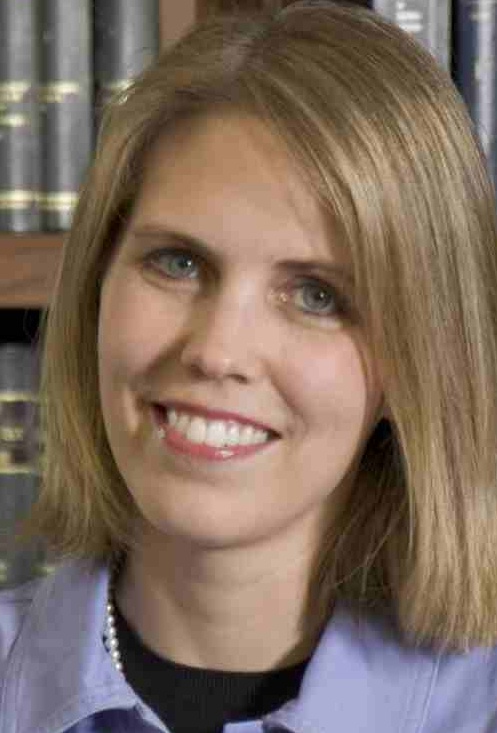
Tina Ann Forkner writes contemporary women’s fiction and has recently contracted with Waterbrook Press, a division of Random House, to publish two novels. The title of her first book will be Ruby Among Us. Visit her at http://www.tinaannforkner.blogspot.com/

Monday, November 06, 2006

The Joy of Research

I love research.

There. I can admit. I love the fact that now I know a stamp cost 3 cents in 1943. That a movie ticket was 17 cents. That half of all K-9s used during World War II by the military were trained at a remote fort in Nebraska. That there were less than 1,000 nurses in the army before Pearl Harbor but more than 12,000 a year later. Can you guess what kind of book I'm researching right now?

I love details.

The highest compliment I can get as a writer is surprise when a reader realizes I'm 32 rather than in my late 70s. That there is no way I lived during the early 40s but I captured the time.

I hate bad research. One of the biggest stoppers for me when reading a book is hitting a detail or fact that I know is wrong. I don't want to give my readers those kind of opportunities to hurl a book against the wall or throw it under the bed to languish, forgotten and unfinished.

So I read books, I review websites (but focus on the ones by people and organizations who were there or preserve that history). I talk to people. I compile all kinds of trivia that I may never actually use, but when sprinkled lightly into the story will give it the ring of authenticity. Now if I could only make myself put the research down and write the proposals all that research is for!

Cara Putman is an attorney and author who lives in Indiana with her family. Her first book, Canteen Dreams, will release in October 2007 by Heartsong Presents. And you guessed it, it's a story set during World War II.

Sunday, November 05, 2006

The Most Important 20 Minutes


© Staci Stallings

Kids today are scattered. They are overloaded with activities and schoolwork that push peace right out of the picture. They are expected to solve 25 problems in 45 seconds, read 120 books in 180 days so they can win a prize, run faster, sell more, play better than everyone else from five counties over. Then they jump in the minivan, study all the way to the next activity. They aren't living. They are just trying to hang on long enough to get to the next big thing.

Of course they learned this lesson from us-their parents. We work long hours, sit in traffic frantically trying to make just one more cell phone call, and pencil meetings into the very last edge of our calendars. I'm not sure what we're afraid we'll miss, but we're bound and determined not to miss whatever it is. When we don't volunteer, we get volunteered to take the team to the next game, to be homeroom mothers, to chair the latest Carnival, to make cookies for the Band bake sale. Sure, our parents did the same, but they lived in towns where there were two Carnivals a year-not one for each of the seven different groups we're affiliated with. In all this chaos, time to be a family-much less to just "be" has evaporated.

Long before I had kids, I recognized this phenomenon in the parents and the students where I taught. "Building a resume" many called it. What they were really doing was trading their life now for some distant fantasy life that they had heard would be on the horizon. Reality is, the life out there on the horizon is nothing more than a mirage. Once you get there, through college and to a job, you won't have more time, you simply start over where your parents left off.

No, the truth is that living life must be more important NOW or it will never be important. That's what I'm trying to teach my kids. I try to teach them that in a million ways every day-by helping them learn to limit the activities to only those that are essential to who they are, by saying no to groups that it would be nice to be a part of but that I know I don't have time for, by choosing very carefully what I say yes to. All of these are part of a peaceful foundation, but the other part is keeping in mind that now is all I have.

That's why in the morning when my kids get out of bed, I make it a point to sit with them in the chair. I try for ten, but even a few minutes just to say, "Good morning" and "I love you" gets the day off to a much more tranquil start. They say the first ten minutes of every morning determine how peacefully or how chaotically the rest of your day will go. That's true, but I will add one more-the last ten minutes of the day also help determine the peacefulness of a life.

I still lie down with my girls at night even though one is eight and one five. We lie together, say our prayers and tell what we're thankful for from the day. It's a very special time. I know they think so too because my eight-year-old brought a picture home the other day. The question was "Where is the best place to pray?" She drew three stick people lying in a bed holding hands.

Bookend your children's day with ten minutes of "just us" time. It will bring a new peacefulness to you and to your kids. Goodness knows our chaotic world needs more of that.

*~*~*
Come over to Staci's website. There's lots to do, lots to read, and lots of ways to be inspired! http://www.stacistallings.com You'll feel better for the experience!

Saturday, November 04, 2006

Meet and Greet


We have some great new additions to the Writer...Interrupted blogroll, so spend the time you would be reading here, there!

Don't know where to start? Why not try the following new members' blogs...

Life in the Midst of Writing

Stifled Squeal

Enjoy the Journey

30 Minute Bible Studies

HillCountryWriter

Home Sanctuary

Ponderings From Picket Fence Cottage

Published author Margaret Daley

The Bookshelf Reviews

Come Out, Come Out Where Ever You Are!

Yes, in honor of my birthday month, it's official Delurking day! So come out and say hi, don't be shy! Let us know who you are and what you like about Writer...Interrupted.

Friday, November 03, 2006

Fiction Friday: Plot continued

There are many different ways a writer plots--you could say it’s an individual thing. I think as writers we listen and learn about the various techniques that work for others, then we incorporate what works for us--sometimes through trial and error. Some don’t plot at all, but write by what some people have called by the seat of their pants. That method doesn’t work for me because I need to know what direction I am going in or no telling where I would end up. Others plot--some with critique partners, some alone, some with a partner. They write the plot down before starting the book--some in great detail, some with only preliminary sketches of the characters and certain scenes and build from there. As you can see there are many ways to plot and no one way is the best. The best way is what works for you--what gets the juices flowing for you.

The definition of plot is the arrangement of incidents in a play, novel, narrative poem, etc. In other words a plot is a series of scenes that build on one another. It is a series of conflicts (testing the characters) which leads to changes--growth hopefully in the characters. The characters and plot should intertwine seamlessly. The plot should come from the characters.

Action Reaction Choice Action Reaction (a circle)

Debra Dixon gives three things a scene should do:
1. Dramatically illustrate a character’s progress toward his goal or provide an experience which changes the character’s goal.
2. Bring a character into conflict with opposing forces.
3. Provide a character with an experience that strengthens his motivation or changes his motivation. You need to at least do one of these if not two or three in every scene in your book.

Each scene should address at least one main character’s goal, motivation or conflict (which may change in the book and often does). Not only should you develop an external goal, motivation and conflict for each of your main characters but an internal one as well where you can. This will strengthen your plot and give more meat to your story. A note here: of the two internal conflict is the more important in romances. That is the way we will really get into the characters’ minds and feel their emotions.

Also according to Debra Dixon a scene should have three reasons for being in a book. Some common reasons to include a scene in a book are:
introduce suspect/character
discover clues
reveal character’s goal
reveal secrets
comic relief
show a character’s faith
What are some other common reasons to have a scene in a book? Think about your own. I have a chart that I’ve attached that you are welcome to use to help you keep track of these reasons in your book. I use it to make sure I have enough reasons for a scene. The chart is in Excel and you can modify it for your own use. This one is set up for a romantic suspense.

Now think of a scene you’ve just written. Does it have three reasons to be in a book? Does it further a character’s goal, motivation or conflict? Does it set up a subplot, a secondary character? Does it explore a character’s faith or lack of? If it doesn’t do those things, take the scene out. One of the hardest things a writer has to do is cut her own work, but a book should be tightly written. If your writing wanders, the reader will likely wander. You don’t want to give them a reason to put your book down.

Margaret Daley
Margaret's Web Site
Margaret's Blog

Thursday, November 02, 2006

C+ Moments


(c) Staci Stallings, 2006

Okay, let's get real. We've all had them. Those horrible, horrendous, completely awful moments in life when we did our best but when we get the report card back, it's not the grade we hoped it would be. My daughter recently had such a moment. It had been an extraordinarily tough semester, and during the last six weeks, the wheels came off the wagon.

She was stressed. Too much homework. Too much reading. Way too much math. Too little sleep. No time to play. No time to draw or climb or just be. And she's only in the fourth grade.

Then came the report card with the C+ in Social Studies. I understood the reality that at her school a C+ is an 84, and an 84 is not failing in anybody's book. However, the C+ did mean that she fell off of the A-B honor roll she'd been on since early in her third grade year (they don't give grades before that). So here she was on the downside of the grading curve with the last grade tallied, and it wasn't what she'd hoped it would be.

My C+ moment came when I was in the fifth grade-only mine was a B+, and I cried for a week. Up to then, I had been an A student. A honor roll every six weeks from first grade on. Then I hit the solid brick wall of "I should've done more." Having learned a few lessons about the grade not being YOU from my experience, I knew I had to find a way to turn my daughter's C+ into a blessing though clearly in disguise.

I told her that the C+ simply meant we had to work harder the next six weeks, that I would take a more active roll in helping her, and that I was proud of her for doing her best in a tough situation. During the next six weeks, she learned that it was all right to ask if she didn't know something. She learned to overcome her penchant for getting distracted with CD's of relaxing water. She learned to concentrate on math and to not take on so much for reading. By the time the report cards came out the next semester, I knew she was doing better.

I didn't know how much better until she opened it and started calling out the grades to me. A. A. A... You got it. She made the A honor roll for the first time ever. She took the C+ and made lemonade!

It was a great lesson for her. It was a better lesson for me. How many times do I look at the C+ moments or the F moments of my life-those times when I feel like a complete failure, those times when I struck out so many times it's pointless to keep trying... How many times have I taken those moments and used them as an excuse to quit rather than seeing them as an opportunity to observe what isn't working and change it?

Is that easy? No. She still had to study. She still had to seek answers for better ways to study. But the point is not that it was easy, the point is she was willing to take a C+ moment and turn it into a lesson she can learn from forever. In my books, that deserves an A+.

*~*
Awesome inspiration is one click away. http://stacistallings.blogspot.com You'll feel better for the experience!

Wednesday, November 01, 2006

Mid-Week Motivational Menu

Welcome to the first mid-week motivational menu. There should be a little something for everyone, so dig in.

Starting Your Day Out Right!
Devotional Thought

I don't usually like the whole, "God is a God of order" rhetoric. I am not a person of order, in general, so this is disconcerting to me--a little easier to incorporate than the "cleanliness is next to Godliness" adage, but still somewhat objectionable to my laid-back sensibilities. However, I have to admit it's true. Who can study the creation story without seeing the perfect order to the events as they unfold? Read Genesis 1. God started "in the beginning," from scratch, a formless empty earth. He added light, sky, land and sea, plants, sun and stars, animals and man, giving instructions as necessary, and proclaiming it "good."

What do your next seven days look like? Is there an inherent order to them? If not, can you take a moment to plan them so that you are following the model of our Creator? How can you spend your time today so that at the end, you can call it "good?"

Is Your House in Order?
Cleaning, parenting, marriage tips, etc.

I am a reluctant housekeeper. However, I find that if my house becomes too cluttered by projects stopped midstream, piles of stuff, papers, or just good old fashioned dirt, it really gives me that unsettled (or cluttered) feeling in my spirit as well, impeding my ability to get anything done. However, it often seems overwhelming and as if a messy room or area can't be fixed in the amount of time I think I have to give the task.

So today, set your timer for twenty minutes and work on the area that is troubling you the most. After twenty minutes, if you are still feeling motivated, work for another twenty minutes. After that, take a break to check email or blogs (but be sure to set your timer for this, as well, for ten minutes perhaps), and then tackle the task again. I amaze myself at what I can accomplish in an hour this way.

Afternoon Pick Me Up
Writing Inspiration

Since we already have our timers handy, set your timer for thirty minutes and deal with some "project clutter." This may have to do with writing some blog posts that have been floating around in your head, but haven't been committed to paper. It may involve brainstorming a list of possible new article projects or story ideas. It could be a research call that you keep neglecting to make. Set your timer and just do it. You'll feel better when the clutter is removed from your pile of work in progress. Feel free to work longer if you'd like.


What's For Dinner?
Quick Dinners

Beef Burgandy
--as much stew beef as can fit in your crockpot (at least 1.5 lbs) because this is great leftover. Just freeze and eat again next week.
--1 can of cream of mushroom soup
--1 cup of red wine (I use cooking wine and it's fine)
--1 pkg of Lipton soup mix, either onion or beefy mushroom

Put stew meat in the crock pot. Mix other ingredients together and pour over meat. Some crock pot dishes can overcook if left all day while you are away from the house, but this one can cook all day on low with no adverse affects. It would probably be done in 3 hours cooked on high. Serve over egg noodles (my favorite), rice, or mashed potatoes.


A Restful Night's Sleep
Scripture for a good night
By the seventh day God had finished the work he had been doing; so on the seventh day he rested from all his work. And God blessed the seventh day and made it holy, because on it he rested from all the work of creating that he had done. Genesis 2:2-3

Reflect on what you've done today. Have you worked in an orderly manner, regarding your calling at home with your family, or your writing ministry, as unto the Lord? If so, enjoy your evening of rest. If not, confess your shortcomings to the Lord and begin tomorrow refreshed and ready to begin again.

Jennifer, at Snapshot, is our first contributor to this new feature. Jennifer lives in Connecticut with her husband and two children. She has gotten her feet wet with concentrated blogging over these last six months and now has her sights set on publication.

Tuesday, October 31, 2006

Pacing in a story

This was an article I wrote on pacing in a romance or a romantic suspense, but so many of the points are true for any type of story. A writer must hold the reader's attention with a compelling plot and compelling characters.

Where do you start a story? You have a few pages (for some a few paragraphs) to catch an editor or reader’s attention. I know of some readers who will read the first page or so of a book and if you haven’t gotten her interest she won’t buy it. It is one of the important decisions for a writer when telling a story. If you start too soon, you might lose your reader. Pacing is important. Too slow and the reader will put your book down. Too fast and you will confuse the reader and leave out details and feelings that need to be in your story.

So where do you start? I like to start in the middle of a scene or at a change in your hero or heroine’s life. In my newest book, Once Upon a Family, which will be out next April for Love Inspired, I started when the heroine has to pick up her troubled teenage son from the principal’s office (he’s the hero) at the new school her son’s attending. She has to deal with yet another problem involving her son. Another opening where the heroine is facing something new in her life is with my Love Inspired Suspense out in January 2007, Heart of the Amazon. Kate, a prim and proper secretary of a church, must go into a bar in a small town on the Amazon to hire a guide to help her search for her missing brother. She’s never been in a bar and doesn’t drink. Then when she meets the best guide in the area, she meets her worst nightmare--everything she isn’t. Talk about opposites!

A word about prologues. I don’t usually have one. Unless the story really should begin years before, don’t do a prologue but start with chapter one even if it is months between the first and second chapter. A lot of readers skip prologues. A lot of time the information in a prologue can be fed into the body of the story in pieces. If you can avoid a prologue, you probably should. I just read a wonderful romantic suspense that started with a prologue of two pages. There was no time difference from that prologue to the first chapter. The first chapter picked right up where the prologue left off. I would have had that scene in the prologue as the first scene in chapter one or even the whole chapter one. In romantic suspense books, sometimes the chapters are very short.

Once you’ve gotten your reader past the first fourth to third of the book, you are plunging your story into the dreaded middle. This is where your plot can fall apart if you don’t have enough story to hold it together. I always try to have at least one big pivotal point that I’m writing toward that will peak in the middle. Example: In What the Heart Knows my heroine’s son is displaying bizarre behavior which is the reason she becomes involved with the hero. This behavior leads to the son running away. The hero and heroine get a lead and go after him. They find him and bring him home. The son is diagnosed with schizophrenia. This all happens in the first two thirds of the book.

In my next three romantic suspense books coming out in early 2007 with Love Inspired Suspense, there is a pivotal point about half to two thirds of the way through the story then the story takes a new direction and I must build toward the final pivotal scene.

During the middle is when I find pacing slows down. Be careful and make sure that you have at least three good reasons to have a scene. I had a sharp editor once who kept emphasizing how important pacing was in a book and I agree with her. Keep the story moving forward. That doesn’t mean you don’t have scenes where a lot of action isn’t taking place. We have to get to know your characters, often without a lot of high drama.

In romantic suspense books it is easier to keep things moving along at a fast clip, but that can have it’s pitfalls, too. While your protagonists are dodging bullets and running for their lives, they must get to know each other and fall in love. If you keep things moving too fast, the reader won’t believe in the end that they really love each other. So if a scene doesn’t serve at least three purposes then cut it or combine it with another one. Remember in an inspirational romance we want to focus on the romance, the characters’ faith journeys, and whatever external plot you have developed for the story as well as the internal conflicts.

Now to the end of your story. The whole book has been building for the big finale--otherwise called the black moment where you make it appear that there is no way the hero and heroine can get together. During the black moment it becomes obvious that they can’t find any common ground to stay together. Usually this isn’t a mutual decision although it can be. Usually it is one character driving the scene--backing away from the relationship. There are a variety of reasons for this and you will have established them as your story develops. Example: In Tidings of Joy coming out this October for Love Inspired, Chance leaves Tanya because he isn’t free of his past. He walks away because hate and guilt crowd his heart. He doesn’t feel he can give Tanya the type of relationship she deserves.

Then not long after the black moment you need to have the resolution where the hero and heroine get together. The black moment should happen within the last two chapters of the book. In the resolution and the few pages that might follow you have to tie up every loose end. A lot of subplots I have already tied up by the time I get to the black moment and resolution. I like the focus of those last scenes to be on the romance between the hero and heroine (even in romantic suspense books).

I have epilogues in my books. This is a two or three page scene which will farther wrap up my story and hopefully give the reader a warm feeling that all is well with my couple in the future. I personally like short--I emphasize the word short here--epilogues. Once I didn’t have one in one of my Love Inspired books and my editor wanted me to put an epilogue in.

Are there any questions on pacing and the structure of a story?

Margaret Daley
Margaret's web site
Margaret's blog

Announcing: Mid-Week Motivation

Thanks to Heather Young who's done an awesome job with the Works for Me Wednesday, but she's taking a break to focus on her family and are prayers are with her as she does!

But don't despair, we've got a great new column coming! It's called Mid-Week Motivation, and I think the name and menu says it all! If you'd like to contribute all or in part of the menu please email! We'll also be looking for a menu coordinator. So if you're a member of the webring and have been blessed by this ministry, please consider coordinating the menus, even if for a short time!

And if someone would like to create a great graphic for the Mid-Week Motivation Menu then send them on. If we get more than one, we'll have an old fashion vote for the winner!

Mid-Week Motivation Menu

Starting Your Day Out Right!
Short Devotion

Is Your House in Order?
Cleaning, parenting, marriage tips, etc.

Afternoon Pick Me Up
Writing inspiration

What's For Dinner?
Quick dinners, crock pots, etc.

A Restful Night's Sleep
Scripture for a restful sleep

Monday, October 30, 2006

Carnival of Christian Writers--Premier!!

Welcome to our first carnival! As you journey the fair grounds, enjoy the cotton candy and be sure and leave comments and tell them the Carnival of Christian Writer's sent you. We're pleased to present to you posts from Editors, Authors, and readers all focusing on writing. Please keep your hands and feet inside at all times and buckle up for your safety. Enjoy the ride...

Oh--and please start thinking about submitting for next month's Carnival!


Fiction Acquisitions Editor at Waterbrook, Mick Silva starts us off with Reality Check #5: Safe Books Are Not. If our reading material offends Christians, let them be offended and welcome in the riff-raff.


Jennifer at Snapshot, is saying it loud and saying it proud,"I am a Writer!"


Jennifer Tiszai at Sonoran Saga ponders a Writer's Imagination as she takes us into the Arizona Desert to experience a flat tire--writer style.

Mike Snyder and his unique sense of humor are on display as he contimplates being a "flawed manipulator" in his offering: Original? I think not.

After reading some depressing statistics in Publisher's Weekly, author Dena Dyer reveals why she writes.


Author Polly Boyettepresents Life is a Buffet: One Small Step


Author Tricia Goyer knows just what it takes to edit a novel and what happens once it leaves the writer's hands?


Gina Conroy explains what happensWhen You Give A Writer A Laptop.


Thoughts and Advice on the Writing Life can be found at Myra Johnson's Writer at Random.


Fiction Editor for Relief Journal, J. Mark Bertrand's The Peripatetic Novel takes John Gardner's talk about the "method" of fiction, combines it with thoughts on the peripatetic school of philosophy, and attempts to discover how the way we write novels might influence their thematic complexity.


Author Mary E. DeMuth presents Commercial or Literary or Both? posted at RelevantBlog.


Author Camy Tang presents Carnival of Christian Writers – the Hook posted at Camy's Loft.


At L'Chaim, Heather scratch-n-sniffs the incense of words with The Words We Use.


Fiction Acquisitions Editor at Howard Books, Terry Whalin explains potential benefits for authors and the publishers with his entry: Amazon Shorts Connect With Readers.


Mary at Home-steeped Hope shares how her inner conflict over writing has recently come full circle in Dancing With The Voices.


Michelle Gregory tells us about how she started writing during National Novel Writing Month (NanoWriMo).


Jennifer Cary shares her epiphany concerning editors and what it takes to "pass the test."


Michelle Pendergrass goes into the closet.

Sunday, October 29, 2006

Two Questions That Change Everything


© Staci Stallings

When you're living with the Holy Spirit, there are many moments when things aren't going the way you thought they would be. That's hard. I know. Because when you put everything in His hands, things are supposed to work out the way you wanted them to, right? I understand. Really I do. What I challenge you to see, however, is that sometimes God knows what we want is not really the best of what can be. He sees that, and He has heard you say you're putting it in His hands and that you trust Him, so He believes you will be patient enough to wait for His perfect timing.

But the truth is, sometimes it just doesn't feel that way. Sometimes His timing drives you completely crazy. Sometimes it is nearly impossible to believe that it will ever happen. Sometimes you just want verification that something is happening because it looks like nothing is happening.

A friend of mine was in exactly this dilemma the day we talked. She had made the leap, had sent in the manuscript to the big publisher, and had even gotten back a reply that wasn't an outright rejection, which in the publishing world is cause for serious celebration. Then the requisitions editor added a little phrase that for two months had grated across her patience. "I will get back to you as soon as possible."

She said, "How long is 'as soon as possible' anyway? I thought that would be like a couple weeks tops. Now it's been two months, and still I haven't heard anything. I'm thinking maybe I should write him and tell him to either publish it or reject it, so at least it's settled and I can go on with my life."

I understood her frustration because when you're living in the world, on your own, seeing things from only your perspective, and believing its all up to you, frustration will naturally occur. Why? Because no matter how right things are now, they could always be better. Yes, you got the manuscript finished. Yes, it was the best you've ever done. Yes, you didn't get the form letter rejection that most often get sent to aspiring writers.
In fact, he liked it. In fact, he said he may ask for more. In fact, this is exactly what you've been praying for since you first typed in that very first word, and yet... Now what?

It's important at moments like this to keep two questions in mind. These two questions in the midst of "This is driving me crazy!" will go a long way to settling your spirit and helping you to see what's really going on. They won't give you more patience but somehow they make patience less necessary.

The first question is this:

Where is my focus?

As life has wrapped around you in a menagerie of directions, have you let your focus fall back into worldly pursuits? In short, is your focus on you or on God? Ah, great question. If your focus is on you, nerves, anger, and impatience is readily evident. You begin to ask questions like, "What should I do?" "How long should I wait?" "What am I doing this for?" And you begin to doubt yourself and your dream. "Maybe this isn't even worth it." "Maybe I should never have even tried." "Maybe I'd be better off trying something else."

When your focus is on you, life is hard. Really hard. No matter what you do, it's never as much as you should have done. No matter where you are, you should be over there. No matter what, life could always be better, and you have a sneaking suspicion that if you could just figure out what everyone else knows, it would be.

On the other hand, when your focus is on God, you trust that you are where you are supposed to be, that things are happening that you can't see that will make the entire enterprise turn out far more wonderfully than you could ever have imagined. So, where is your focus?

The second question is this:

What is God trying to teach me through this experience?

This is a nice question mostly because it distracts your mind and gives it something other than cataloging how awful this is and dragging your focus back to you. However, it's also a very helpful question for a lot of other reasons. The most important because every situation can teach you something if you are open to the lesson and if you are looking for it. Many people get so caught up in getting to the goal they've set that they close themselves off to other ways success might actually be happening.

For example in my writing, I wanted to sell a lot of books so money would not be a problem My efforts went to making this happen. My time was devoured by it. It consumed me. Then one day I stopped my headlong pursuit of "success" long enough to ask what God was trying to show me through the waiting. Immediately I saw two things. One, the money was not a problem. It just wasn't coming from me but from my husband's booming business. Solve one. Secondly I began to see what I had learned in the waiting.

One of the biggest was getting a really long, hard look at the life of an author with the success I thought I wanted. Jetting off every weekend to book signings or speaking engagements, attending conferences and book fairs. I'm not saying those things are wrong for everyone. But they are wrong for me.

Another was bending who you are in order to get a publishing company to like what you wrote enough for them to publish you. Now many readers don't realize how completely a manuscript can be changed from inception to completion to publication. In fact, my first novel "The Long Way Home" was published with the help of an editor. I will be forever grateful for the things he taught me, but one of those lessons was how little control the author has over what finally goes out.

My editor, for whatever reason, was colon crazy. He would put colons into the manuscript for no apparent reason. He just liked them. After awhile he admitted that some he had put in just to see if I would catch them. I did, but what I didn't catch was how thoroughly he had stripped my voice out of the manuscript. By the time it was finished, it sounded just like every other book on the market. Some call this making a book "marketable," but I'm not so sure. The more I look at what this process does, the more I am convinced the one thing it does with precision is to eradicate the unique voice God gave to the author.

Of course it's always done under the guise of making the work "better" and "marketable" by the world's standards. To which I have to ask, "Where is God in this?"

So, for me, I'm glad God didn't give me the world's definition of success with my novels. I would no doubt have run myself and my family into the ground over it. That's one of the things He taught me, and one of the lessons I know I would have missed had not learned to ask the two questions that change everything.

*~*~*~
Don't miss out! All who subscribe to Homeward Bound at http://stacistallings.blogspot.com by Oct. 31 will receive a free online book by Staci Stallings. Sign up today. You'll feel better for the experience!

Saturday, October 28, 2006

Distractions

My husband thinks I'm a little on the, uhm, unique side. I pretty well confirmed that he's right. I made myself a cozy little office in our storage closet. Yep. I sure did.

If you're cheering my sheer genius (or pure desperation)speak up! That means that you've wanted somewhere, anywhere that you can go to escape. I cannot be the only one. If I am, don't ruin my delusion. Play along, ok?

I've had my BOC time. Thank you, Mary DeMuth, for the use of your phrase. BOC=Butt on Chair. I've had my butt in this chair but I've been doing anything but writing. Reading blogs, sending emails, helping with the upcoming Carnival of Christian Writers, chatting, balancing my checkbook--ACK!!

Why is it so hard some days to get anything done at all? Again, please don't ruin my perfectly good fantasy that there are more people out there who feel this way. I have stories swimming around in my head constantly. Yet, I'm messing around doing things I shouldn't be doing, or at least I should write first and then play.

So I decided I'd fix it. I cleaned out the storage closet, well, I didn't exactly clean it all out. Half of it. I placed an old school desk in there with my back toward the messy side and I put a card table beside that covered with some nice black fabric. I put some wood crates on it and my writing books, I hung a shelf and put my important inspiration pieces on it, and set up the laptop. This is all very calculated. I have to have my back to the chaos of mess behind me, I have to have stuff that is important only to me around, and I need to have my internet privileges taken away from me.

I took pictures, but they're not available yet so when I get them I'll show you my wonderful new hideaway. I am thrilled about this and my husband patted me on the head and told me he still loved me.


~michelle
My thoughts grew hot within me and began to burn, igniting a fire of words
Psalm 39:3


Michelle Pendergrass is a coffee-lover who lives in Knox, Indiana where she homeschools her son, Zane. She blogs at Just A Minute. When you visit, please note that her son is most definitely weaned and has been for some time now. Some names just stick.

©2006 Michelle L. Pendergrass - All Rights Reserved

Friday, October 27, 2006

Carnival of Christian Writers


Thanks to Heather who created the perfect button for our carnival! If you're participating in the carnival please copy this button and put it on your submission with a link back to the post on Monday!

Fiction Friday: Plot, part I

When we are talking about a plot, I am compelled to say: SHOW DON’T TELL. You might study some of your favorite movies. A movie has to show you what is going on. It’s the nature of the beast. Also, while you’re at it, study books on your keeper shelf to see what that author did as far as plotting went. Go through it scene by scene to see the progression of the plot. Another thing you can do is do that with your own book even if you’ve only completed part of it. Stepping back and looking at your book scene by scene can tell you if you’ve done what you should--address the goals, motivation and conflict and have at least three reasons for the scene. If not, cut the scene or change it until you have accomplished what you need to.

Remember when plotting keep in mind your characters’ goals, motivations and conflicts (that’s what a story is about--if not it isn’t a story that will hold a reader’s interest). A character has a goal because of a motivation but the conflict gets in the way of that goal. A character’s motivation should run through the whole book--something the protagonist doesn’t have is the best. The goal needs to be strong enough that the character will act against his best interest. Through conflict your character grows and is tested. This is where you can play up the faith element and have your character grow spiritually. The conflict should require your character to make choices and sacrifices. Debra Dixon wrote an excellent book called Goals, Motivation and Conflict about these three elements of a story. I highly recommend you get a copy and read it. By understanding and developing these three elements of your main characters you will have your plot for the story.

As I said at the first some writers outline thoroughly before writing a word while others write by the seat of their pants. I write in between those two methods. I have a good sense of my two main characters and sometimes secondary characters, depending on the story. I know what my beginning will be and my end. I also know what my high points will be (derived from what the conflicts are).

I like for a plot and the characters to percolate in my mind before I begin writing. I want to get a sense of who these people are and what they want to do (as well as what I want them to do). I also use this time to brainstorm with my critique group or myself. I love to brainstorm ideas about my book or anyone else’s. I look at it as a giant jigsaw puzzle that needs to be put together--sometimes one slow piece at a time. Some plots flow quickly from me, others take a long time.

After I’ve done this I sit down to write my first three chapters, then my outline to submit to my publisher. I will say when writing my outline for the rest of the book I realize that it may change over time. Never lock yourself into a plot. Learn to listen to your characters as they develop in the story. I often find they usually know what’s best, especially as I get to know them better.

Margaret Daley
TIDINGS OF JOY, Love Inspired, October 2006
HEART OF THE AMAZON, Love Inspired Suspense, January 2007
http://www.margaretdaley.com
http://margaretdaley.blogspot.com

Thursday, October 26, 2006

Button Help Needed!

In anticipation for the new Carnival of Christian Writers, I've been wanting to make a button, but my button know how is soooo limited, well actually it's nonexistent!

So if any of our readers (or relatives or friends of readers) know how to create one and would like to help, drop me an email! I know exactly what I want, but don't know how to do it!

Operation Christmas Child: Shoebox Fun

Tears gathered in my oldest daughter’s eyes as she implored me, saying, “Mommy, please, just don’t give me as much this Christmas, these kids need things more than I do.” She needn’t have begged, I was all for the idea.

Operation Christmas Child. With the National Collection Week in mid-November, there’s no time like now to start planning your box. Choose a gender, an age (2-4, 5-9, 10-14), and spree thee to the nearest Dollar General. Flip-flops would be a versatile filler, just size-guess according to the bigger end of your age range. Another fun idea would be to buy a sports ball and deflate it. Stick the small pump in alongside it and just picture the grand times to be had by all. Arts and crafts, personal hygiene products, a stuffed animal to hold close…

OCC is a great way to encourage the gift of giving in your children every Christmas. Each year Samaritan’s Purse collects boxes from all over and sends them overseas to boys and girls ages 2-14. You pack your box with a specific age/gender in mind, and label it accordingly. The best thing about these boxes is that Samaritan’s Purse includes in each one a Gospel booklet that’s followed up with a discipleship program. Over 7 million children received these last year.

Wrap your shoebox and lid separately. We choose to buy plastic Rubbermaid containers (shoebox-sized) simply because they can be reused by the recipients. If you’d like, place a photo of your child in the box. We were touched by a shot in the Samaritan Purse magazine showing a young girl kissing the picture of her giver over and over.

Their website has all the info you need on drop-off locations and gift guidelines. You can even mail your box (es) directly to Samaritan Purse if there’s no drop-off nearby. They ask a $7 donation be included in each box to help cover shipping/handling costs plus printing/distribution costs of the Gospel storybooks. And get this, if you feel you simply don't have time to shop and assimilate a box, you can "adopt a box" and donate $7 for its shipping costs.

Three or four years ago, in lieu of exchanging care packages, an out of state friend sent us a special card printed by Samaritan Purse. It informed us that they’d sent an OCC box in honor of our family.

What better gift this season, than a gift that keeps on giving?

Mary is an old-fashioned thirty-something wife, homeschooler, and aspiring writer. Her blog, Home-steeped Hope, feeds her love/pursuit of the written non-fiction word while her women's fiction "dreams" wait TBR (to be revised)...

Wednesday, October 25, 2006

Discovering Food Allergies Part 2


When I was 5 weeks pregnant with our second child we moved away from western PA to northern Massachusetts. There we attended Haverhill C&MA church and met our good friends Bea and John, who had three children, the youngest of which was 3 years older than Rachel. We started attending the small group that met at their house and became quick friends.

My husband was working away from home for the first time since we married so I spent a lot of time visiting Bea, who homeschooled her two girls (8 and 6) and boy (5). I watched and listened as she talked about her children's numerous food allergies, as she discussed the benefits of homeschooling, and all the other bits of wisdom she had gained in her 8 years of parenting.

She started noticing that my 2 year old (Rachel) would have moments of sweetened, and moments of absolute hyperactivity, with the added benefit of bright red cheeks and the inability to cope with anything. She, with her natural intuition in such things, started watching what she was eating at her house and mine. She asked if she ate a lot of foods with red dye. Well, yes, she did. She was finishing potty training and got a Twizzler every time she made it to the potty. Bea suggested we take her off anything with Red 40 and see how she did. We tried it and were amazed, until one day she had the same reaction and had had NO Red 40. We looked at what she had been eating. The culprit ended up being Blues Clues applesauce, dyed blue of course. We added Blue 1 to the list of no-nos.

After some research I found that Red 40 and Blue 1 both are known allergens as well as triggers for hyperactive behavior. We praised the Lord that we discovered them when we did. We later discovered that her siblings (and father) had the same reaction. My husband does not get hyperactive from Red 40 though we have found that it triggers depression and spells of irrational anger.

With Rachel and Issac we find head banging, intentional overstimulation, and hyperactivity. With their sister, Esther, we note repetitive verbal ticks, inappropriate laughter, and physical ticks. We have also learned that not only do enzymes not help with the digestion of chemicals, including Red 40 and Blue 1, but that watercolors, markers, play-doe, chalk, and other dye containing items can trigger reactions.

Just last week we were wondering what was wrong with Issac, who had spent the last few days running around the house, covering the entire living room--back and forth, back and forth, in moments, head banging, and other behaviors. This was while Rachel was in the hospital and only one of us at a time was home to observe the behavior. Finally, we realized that his grandmother had given him a play-doe set for his birthday. Normally this is fine as we avoid all but yellow play-doe. On this case he was not. It took several hours after playing with it for it to cause a reaction (his skin had to absorb it.) The same thing happened today at church. I went to pick him up and found him bouncing off the walls. I went into the familiar conversation with the teacher: "What did he eat,? What did he play with?" In this case the culprit was colored chalk.

Usually a dose of Benedryl does the trick. Sometimes a combination of bath and Benedryl are necessary. At least we know what to look for and can react appropriately.

Heather Young is a saved by grace, homeschooling, mother of three, wife of one, writer, artist, and web designer who drinks way too much coffee and spends too much time at her computer. She writes for Graced by Christ, Laced by Grace, Everyday Miracles, and Writer....Interrupted. Someday, God willing, she will finish one of her WIP and attempt to get it published, but not until God says the timing is right.

Tuesday, October 24, 2006

Giving Your Writing Journey to God

LIKE MANY OF YOU, I have been working toward being a novelist my whole life. It’s taken years of hard work and God to get to this place and it’s only been in the last few years that God has moved the waiting pieces together.

When I was younger, I thought I wanted to write Christian Historical Fiction. For me, Jeanette Oke, Lori Wick, and Francine Rivers represented the sum of good fiction. Later (about a decade ago) I became an English major and was introduced to other kinds of writing and at that point in my writing journey, I learned that literary or mainstream writing never shared space on reading lists with Christian Fiction.

As I studied other types of writing, my own writing became better, but I had no idea what path I should take. Which brings me to the verse I chose for this reflection when I delivered a different version of it at the 2006 ACFW Conference. It’s from Proverbs 3:5 and 6. “5 Trust in the Lord with all thine heart; and lean not unto thine own understanding. 6 In all thy ways acknowledge him, and he shall direct thy paths.”

After graduation, I moved away and soon found myself in a situation where I had no writing community, let alone a path I knew I was supposed to follow. I wrote what I could and tried some different things, but because I also found myself divorced and living as a single mom, writing couldn’t be a top priority. During this time, I had a fight with God. God seemed to being say “no” to me at every turn.

That was a tough time, but I learned lots and through taking that journey with my daughter, I learned about life. I met others worse off than me and I was put into the shoes of those I’d judged before. I felt I'd become the judged in the eyes of many. Then God gave me my story. I sat down one day and wrote a few paragraphs, it might have been a few pages. I then closed the file and didn’t open it for a few years.

After I met my husband, Albert Forkner, my life changed. He is a real life hero rivaling any I'd read in a historical romance, I have to admit. With him in my life to support me, I opened that file and reread those words I’d written as a single mom; and they came alive. I knew that story. I’d been there. It wasn't historical romance, but it was the right story.

When I started the book, I didn’t think about publishing. I just wanted to see if I could finish it. I eventually got in contact with my agent through a relative. I sent my manuscript to this relative who knew me well, just to receive encouragement. This relative went a step further and chose to put my manuscript in front of an agent who represents a very prominent CBA author and works for an agency representing several music industry artists with big names like Amy Grant. When she told me what she’d done, I was terrified. I remember worrying that my writing would end up making her look bad in her job! I would surley embarrass her!

Well, I haven’t made her look bad yet (although there is still time - grin). The day my agent called to ask if he could represent me was an exciting day. I mean, it’s not like I had agents calling me every day, let alone someone as amazing as him. In fact, I wasn’t even looking for one. That was just another piece of the puzzle God moved into place at just the right time and the next piece was that Ruby Among Us was sold to Waterbrook of Random House.

When I was a divorced, single mother living miles from home struggling to make ends meet, I never dared to dream my writing would one day be so blessed. So, just remember this, no matter where you are at, God is sovereign and you can’t mess him up. If I can’t, then nobody can!

Tina Ann Forkner writes contemporary women’s fiction for Waterbrook Press, a divion of Random House. Her first novel is due out in 2007. Ruby Among Us is a story of intergenerational relationships and God's permissiveness and providence in the lives of its characters. Tina is an Executive Assistant for a technology company by day and has a special interest in women’s ministries that meet women where they are at. She has written poetry and juggled a modicum of freelance writing projects over the years. Visit her at www.tinaannforkner.blogspot.com

Monday, October 23, 2006

Introducing: Margaret Daley


Let's give a big welcome to my friend, Margaret Daley, a multi-published writer of inspirational romance and inspirational romantic suspense. She writes for Love Inspired and Love Inspired Suspense. Besides being a writer, she is a high school teacher of students with disabilities and grandmother to two adorable girls.

Please welcome her to the group by visiting:
Her blog
Her Website